
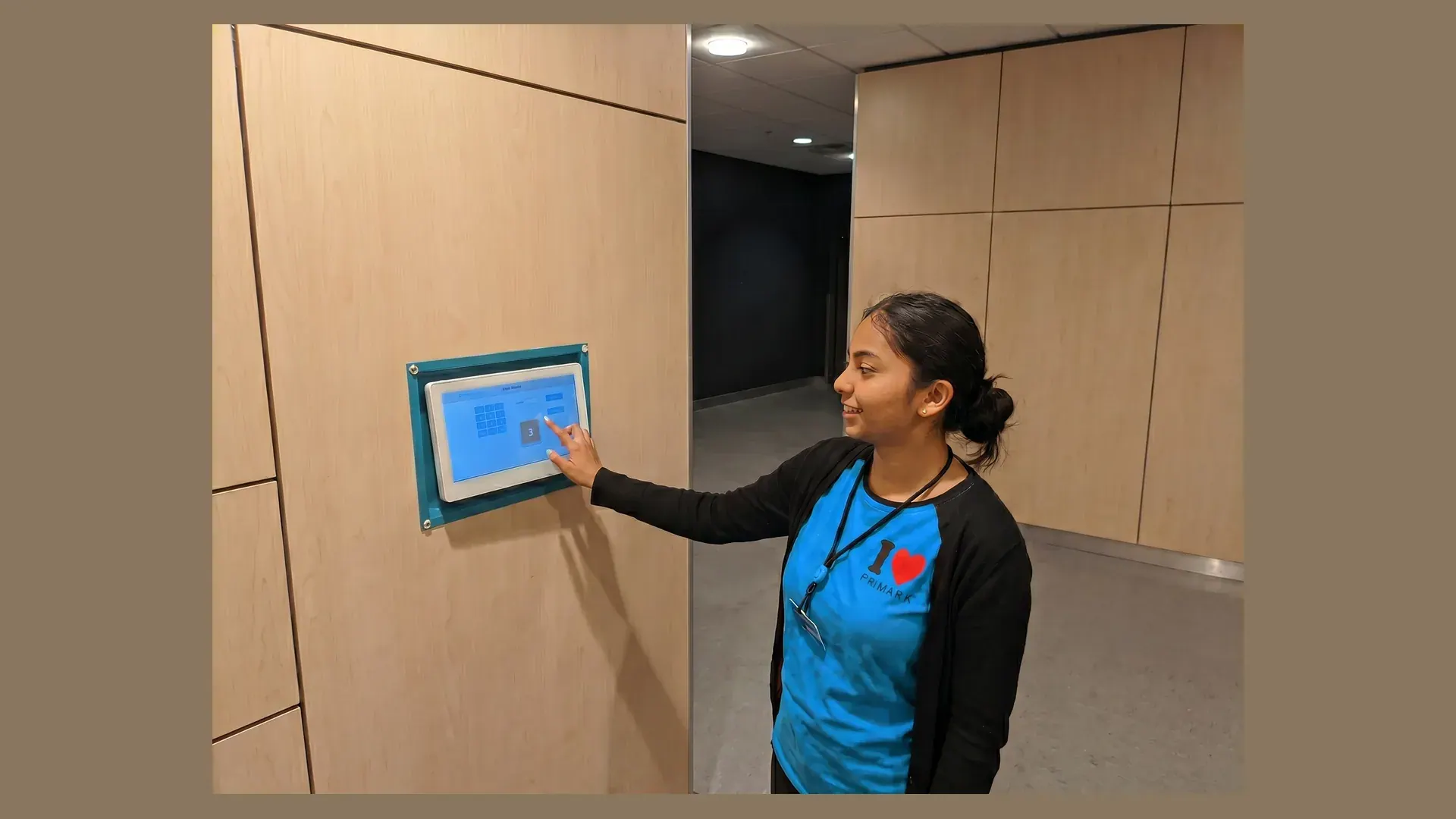
The brief.
Garment Control is an RFID fitting-room platform running across 13,000+ cubicles in around a dozen markets. Through AtWrk Ltd, this engagement took two of its products for Primark from a signed-off concept to the brand’s standard, into production, and through years of live service.
The problem.
The concept was approved on paper, but not to the standard a brand like Primark puts in front of customers and trusts store teams to run under pressure. The scope was fixed — decisions the customer had already accepted couldn’t be reopened.
- Training modes, call-out screens and icon lists were pure overhead during live trading
- A test mode could be triggered mid-shift
- The fitting-room entrance needed to move customers into rooms fast at peak, with no room for error
- Live support ran on undocumented, ad-hoc knowledge
Our approach.
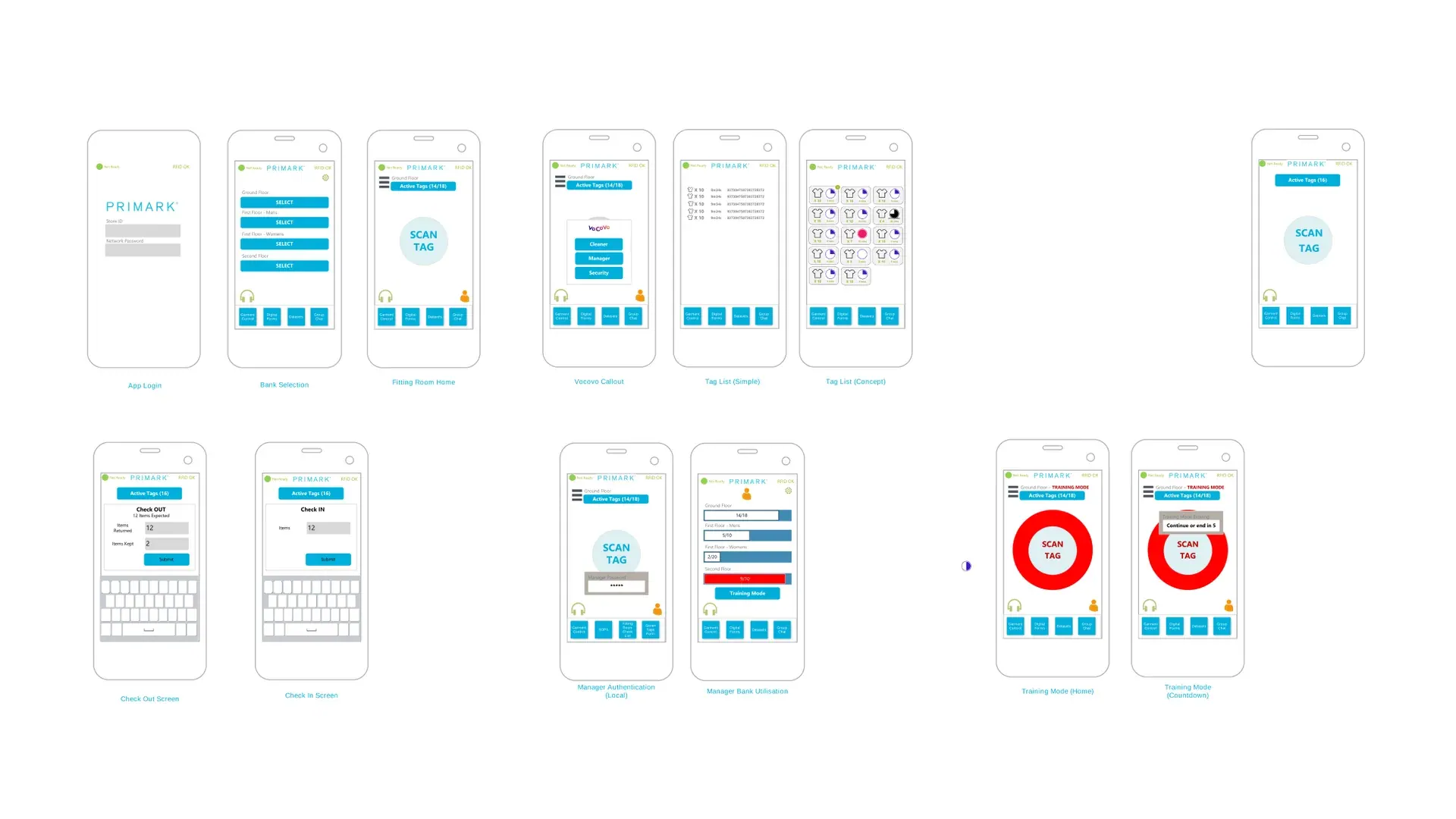
Every screen was audited against its operational purpose, then resolved into a buildable product — high-fidelity designs, journey maps and user stories, with developers guided through implementation rather than handed a spec.
- Staff and manager flows separated so the two contexts couldn’t be confused
- A colour-and-error system that changes the whole screen when something is wrong
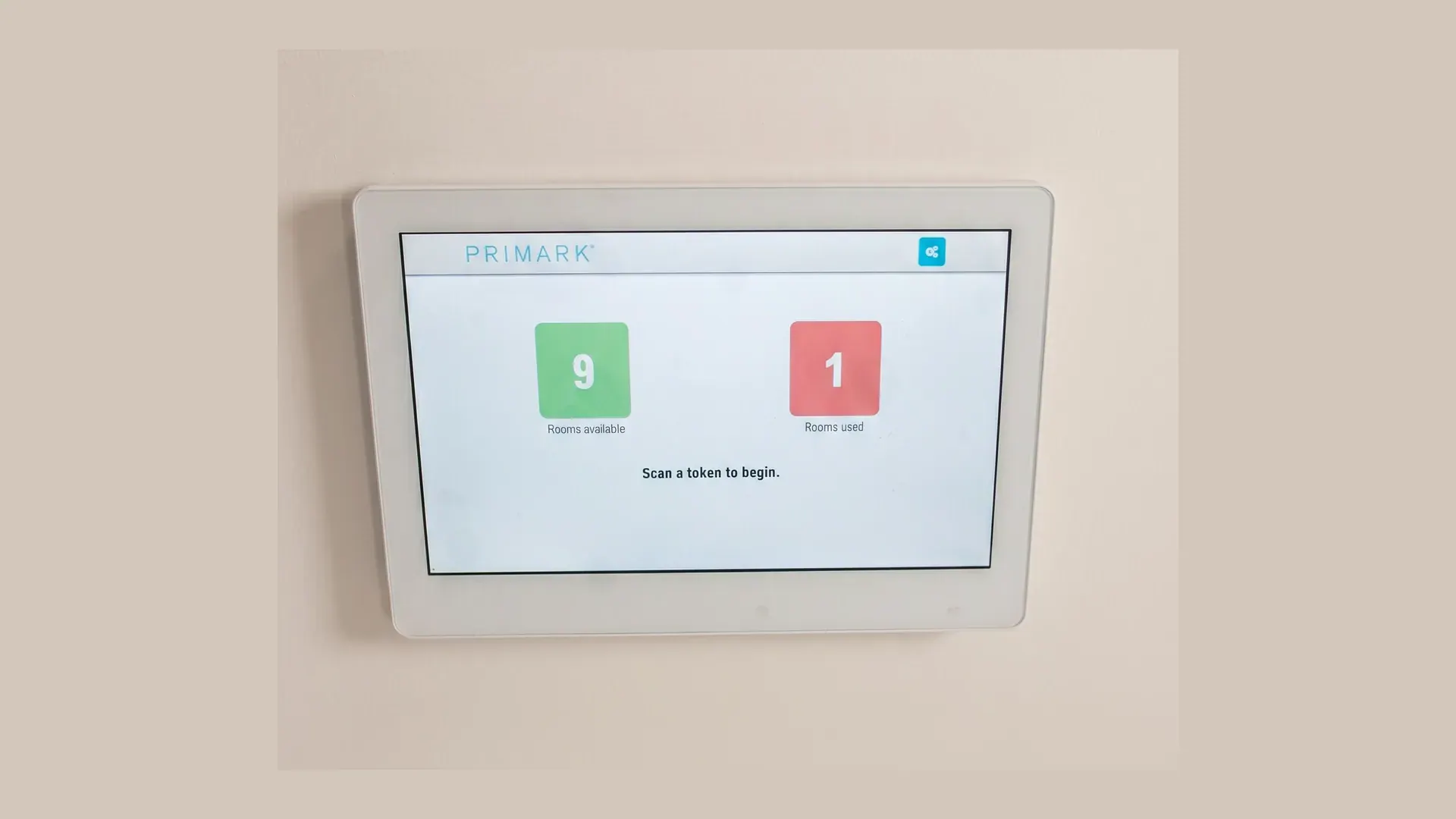
- A single-purpose entry wall tablet: scan the token, count the items, auto-assign a room
- Diagnostics, triage and engineer management documented for the support operation
The impact.
Both products shipped to the Primark brand bar, and the support service held its SLA across three renewed annual agreements. The same platform served TK Maxx through configuration alone.
- Staff app screens cut from twelve to nine
- An entire error class designed out of live trading
- 13,000+ fitting-room cubicles deployed across the estate
- Support kept running through staff absence, against a 15-minute triage, 2-hour fix P1 SLA